
Wheat Import from India to Bangladesh: Why 2026 Is the Right Time to Restart Sourcing

Import wheat from India to Bangladesh. With the ban lifted for export of wheat from India, Bangladesh stands to gain with faster shipments, lower transport costs and a wider variety to choose from.

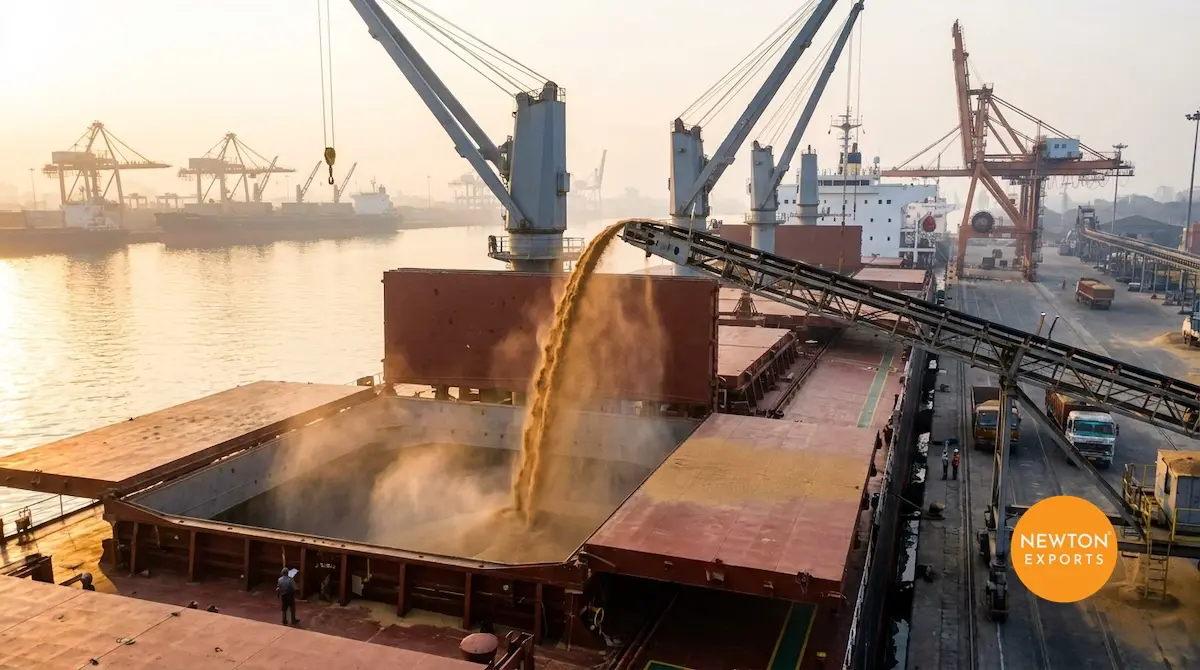
For decades, Bangladesh depended on India for nearly half of its wheat imports — cheap, fast, and just a few days away by land and sea. That changed in May 2022, when India banned private commercial wheat exports, sending Bangladeshi buyers scrambling toward Argentina, Canada, Ukraine, Russia, and the United States. As of August 2026, that door has reopened. For Bangladeshi flour mills, bakeries, and food processors evaluating wheat import from India to Bangladesh once again, the timing could not be better.

The Ban, and Why It's Over

India’s May 2022 export ban came after early-season heatwaves cut domestic wheat yields just as the Russia-Ukraine war sent global grain prices spiraling. What followed was four years of near-total restriction, with commercial exports falling to a trickle — $30-40 million a year, largely government-to-government humanitarian shipments to countries like Nepal and Afghanistan.

Bangladesh, which had sourced roughly 44% of its wheat import value from India before the ban, was forced to diversify. Argentina, Canada, and Ukraine picked up much of the slack. But geography never changed: India’s west-coast ports are still a fraction of the distance from Black Sea or South American suppliers, and land-border mills in northern and central Bangladesh still sit closer to Indian mandis than to any other origin.

In August 2026, the Government of India moved wheat, durum wheat, atta, maida, and semolina from “Prohibited” back to “Free” export status — a policy reversal that reopens direct, private commercial trade for the first time in over four years.

A Record Harvest Means India Has Wheat to Sell

wheat import from india

The ban lifted at a moment when India is sitting on an unusually large wheat surplus. The 2025-26 harvest came in at a record 120.65 million tonnes, and government buffer stocks stand at roughly 49 million tonnes — well above what’s needed for domestic food security. That surplus is a major reason the ban was lifted, and it means Indian mills and exporters have genuine volume to commit to export contracts, not just token quantities.

Domestically, this surplus has kept Indian wheat prices flat and, in places, below the international benchmark. National wholesale wheat is trading around ₹2,600 per quintal (roughly $272 per tonne), close to the government’s minimum support price, while Chicago Board of Trade futures have pushed toward a two-year high near $257-270 per tonne on the back of renewed disruption to Black Sea shipping. For the first time in years, Indian and international wheat prices are converging — and Indian exporters have the stock to compete at that level.

A Weaker Rupee Is Sharpening India's Price Edge

There’s a second tailwind working in Bangladeshi buyers’ favor: the Indian rupee has depreciated significantly through 2025 and 2026, trading near ₹95-96 to the US dollar — down roughly 9% year-on-year and off an all-time low above 96.8. For dollar-denominated import contracts, a weaker rupee directly lowers the effective cost of Indian wheat without India’s exporters needing to cut margins. Historically, periods of rupee depreciation have coincided with stronger competitiveness for Indian agricultural exports, and this cycle is no exception. Combined with record stock levels, it puts Indian-origin wheat in a genuinely strong position against Argentine, Canadian, and Black Sea alternatives on landed cost.

Logistics: Still India's Biggest Advantage

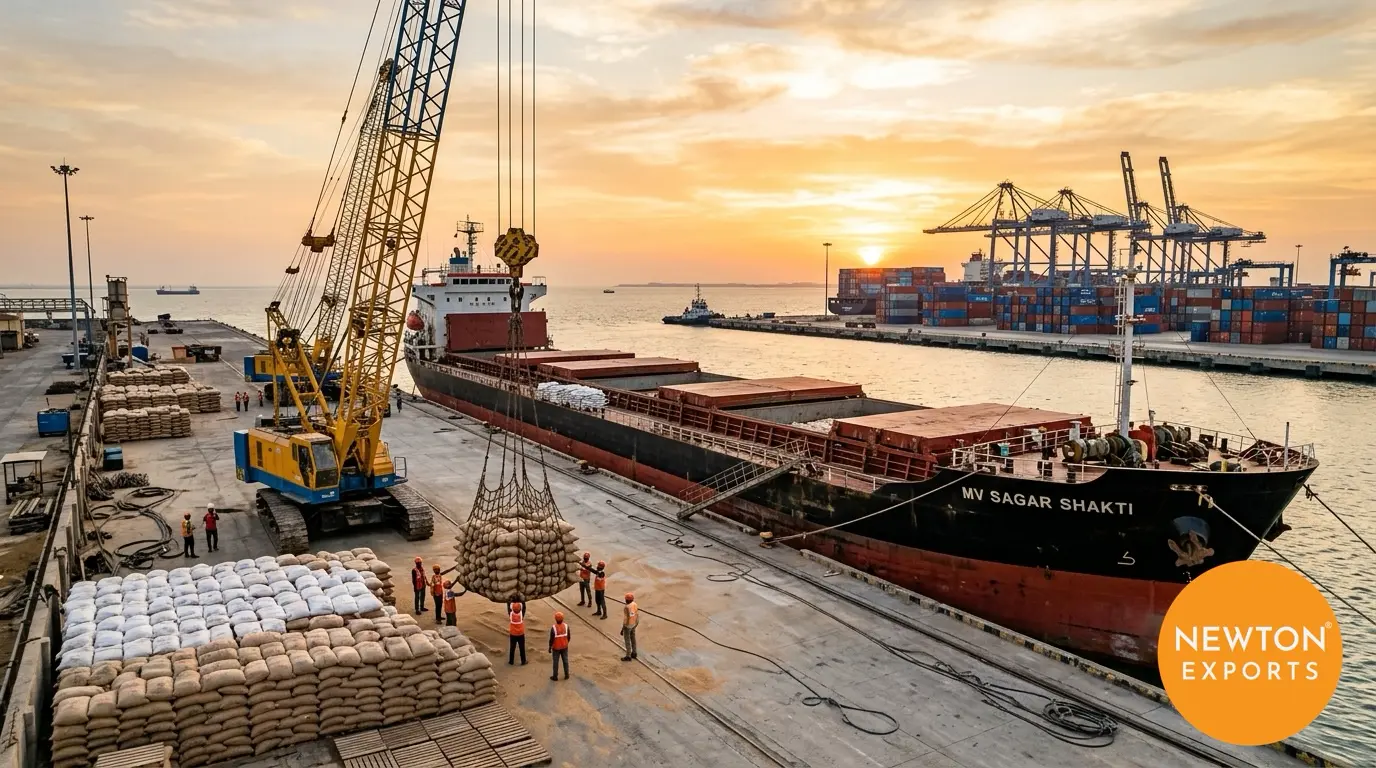
Price aside, geography is where India wins outright. Wheat shipped from Indian ports like Kandla and Mundra reaches the Bay of Bengal and Bangladeshi ports in a fraction of the time it takes from the Black Sea, Australia, or the Americas — often 2-4 days via rail and land border routes, compared to two to four weeks from more distant origins. For Bangladeshi flour mills managing tight working-capital cycles, that difference in lead time is often worth more than a marginal price gap, since it reduces inventory carrying costs and insulates buyers from shipping delays.

Why Value-Added Products May Be the Smarter Buy Right Now

wheat import from india to bangladesh

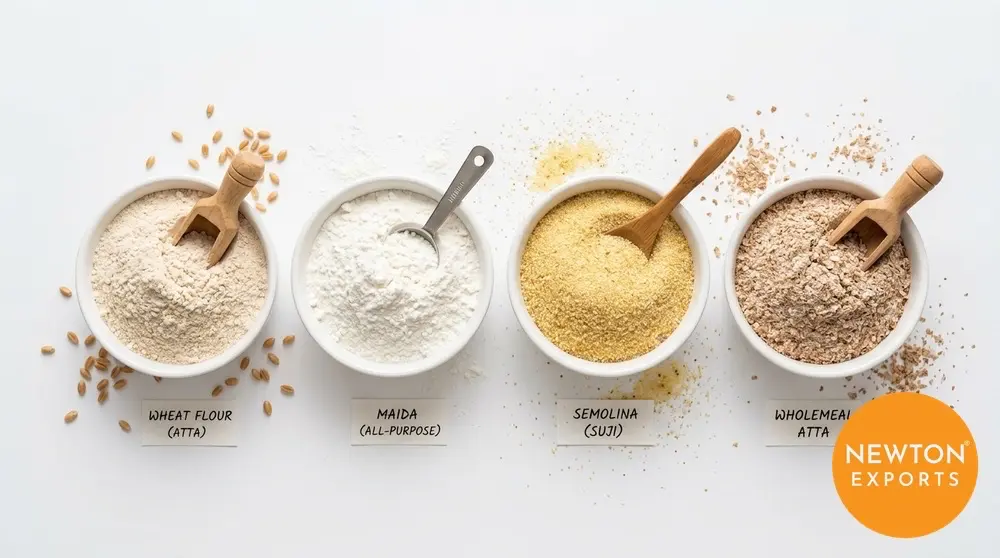
One nuance worth understanding: at current port prices, raw Indian wheat is close to, but not always below, the break-even point against Black Sea grain once freight is factored in. Because of this, value-added products — flour (atta), maida (refined flour), and semolina — currently offer better export margins for Indian suppliers than raw grain shipments. For Bangladeshi flour millers, bakeries, and food manufacturers, this makes bulk atta, maida, and semolina an especially competitive category to source directly from India right now, alongside raw wheat and durum wheat for in-house milling.

wheat-flour-maida-semolina2

Newton Exports supplies both categories in bulk export packaging:

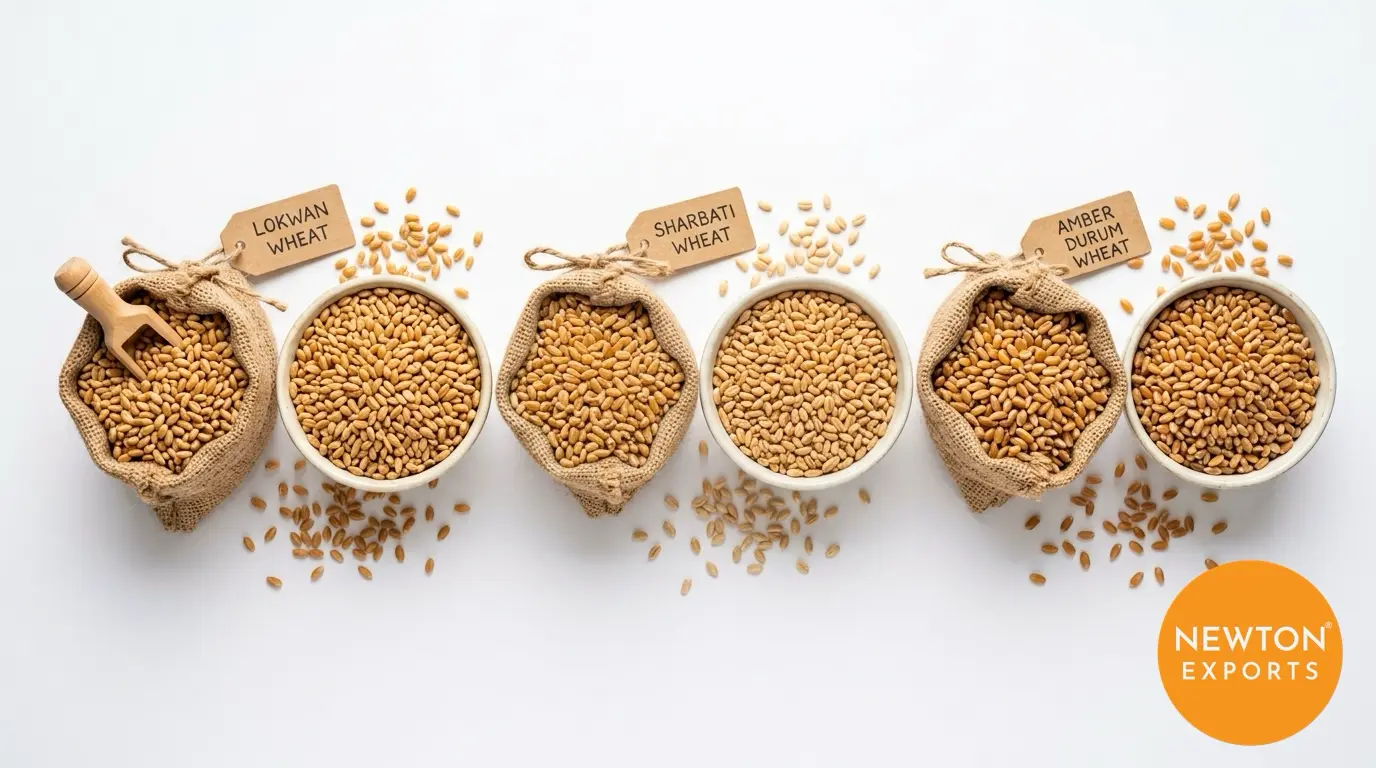
  • Wheat & Durum Wheat — MP Lokwan, Sharbati, durum, and FAQ-grade Dara wheat, packed in 50kg PP bags and 500-1,000kg jumbo bags for container and bulk vessel shipment.

  • Wheat Flour, Maida & Semolina — atta, maida, and semolina milled by FSSAI-licensed mills, packed in 25kg and 50kg export bags.

What This Means for Bangladeshi Buyers

For import managers and procurement teams re-evaluating supply routes after four years of diversification, the combination of factors now lining up is hard to ignore: a genuine policy reopening, record Indian stockpiles keeping prices flat, a rupee depreciation improving dollar-cost competitiveness, and India’s unmatched freight advantage into Bangladesh. Buyers who locked in alternative origins during the ban years now have the option to re-test Indian supply — either as a primary source or as a way to diversify origin risk alongside existing Argentine or Canadian contracts.


Looking to import wheat from India to Bangladesh?

Browse Newton Exports’ wheat and flour catalog or get in touch for bulk export pricing and packaging options.

Whether you’re sourcing raw milling wheat for an in-house mill or ready-to-use atta, maida, and semolina for direct production, now is a practical time to request quotes from Newton Exports and compare landed costs against your current suppliers.

For inquiries or RFQs, contact Newton Exports:

Newton Global Connect, your go-to source for India export insights & buyer guides

wheat import from india

Rice and Wheat Imports from India to Bangladesh

Complete guide on rice and wheat imports from India to Bangladesh. Explore supply dynamics, border routes,...
wheat import from india to bangladesh

Wheat Import from India to Bangladesh: Why 2026 Is the Right Time to Restart Sourcing

Wheat import from India to Bangladesh begins with the ban lifted. 2-4 day freight to Bangladesh, now's...
TMT bars from India

TMT Bars from India: Grades, Brands and Sizes

Buy TMT bars from India — Tata Tiscon, Jindal Panther, JSW Neosteel & SAIL TMT in Fe500D to Fe600...
LRPC Strand Wire Coil

Sourcing High-Performance LRPC Strand Wire: The Definitive Technical & Procurement Guide

Explore the complete guide to Low Relaxation Pre-stressed Concrete (LRPC) strand wire. Learn technical...
Miniket-Rice

Premium Parboiled Miniket Rice Exporter

Trusted premium parboiled Miniket rice exporter. Bulk B2B supply, Sortex-cleaned, EU MRL compliant, private...
UK India FTA

UK India FTA - What it means for Global Supply Chains

On July 15, 2026, the historic UK India FTA (Free Trade Agreement) officially entered into force changing...
NID Threads of Tomorrow Newton Exports

Bharat Tex 2026: Key Sourcing Trends for Global Buyers

Newton Exports at Bharat Tex 2026 — sustainability, home textiles, technical fabrics and craft trends...
Woven Coated Tarpaulin UV Stabilized

Woven Coated Tarpaulin

Newton Exports supplies woven coated tarpaulin, UV stabilized , IS 7903 tested. 70–250 GSM (higher on...
1 2 3