
Bharat Tex 2026: Key Sourcing Trends for Global Buyers

Inside Bharat Tex 2026: What We Saw and What It Means for Buyers Sourcing from India

Bharat Tex 2026, the Global Textile Expo organised by the Consortium of Textile Export Promotion Councils (EPCs) and industry bodies, with the active support of the Ministry of Textiles brought together textile manufacturers, exporters and buyers from across the world at Bharat Mandapam, New Delhi (14–17 July 2026). Spread across more than a dozen halls (spanning home textiles, technical textiles, fashion and apparel, fibres and yarns, and an international pavilion), it is one of the largest textile sourcing events on the global calendar.

Our team spent the day walking the halls, meeting manufacturers, and evaluating new suppliers and product categories. Here’s what stood out, and what it means if you’re sourcing textiles, home décor, or technical fabrics from India.

1. Sustainability Has Moved from Marketing Claim to Manufacturing Process

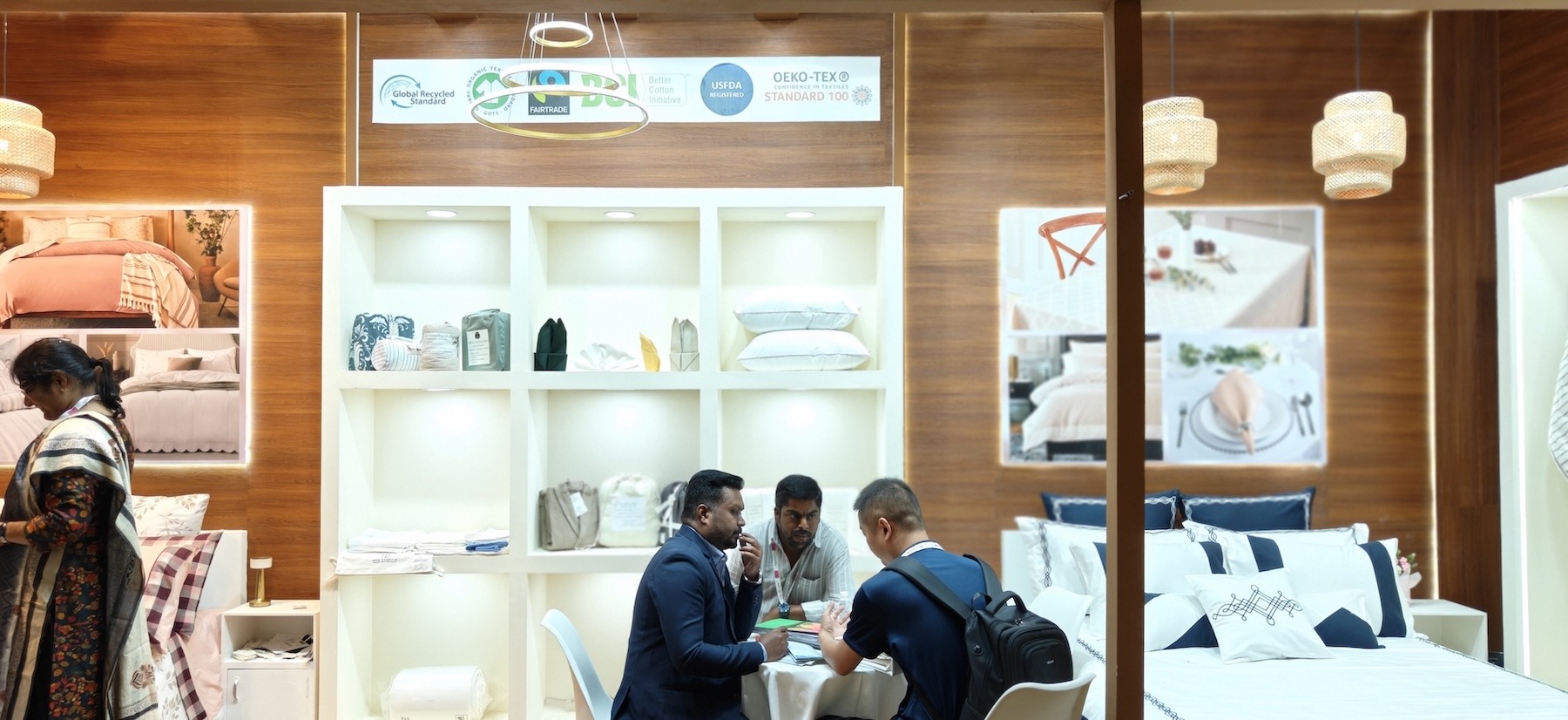
Nearly every serious exhibitor at Bharat Tex 2026 had certification boards on display – Global Recycled Standard (GRS), Global Organic Textile Standard (GOTS), Fairtrade, Better Cotton Initiative (BCI), OEKO-TEX Standard 100 registration. This wasn’t limited to a “sustainability corner” – it was standard signage at bedding, home textile, and yarn booths alike.

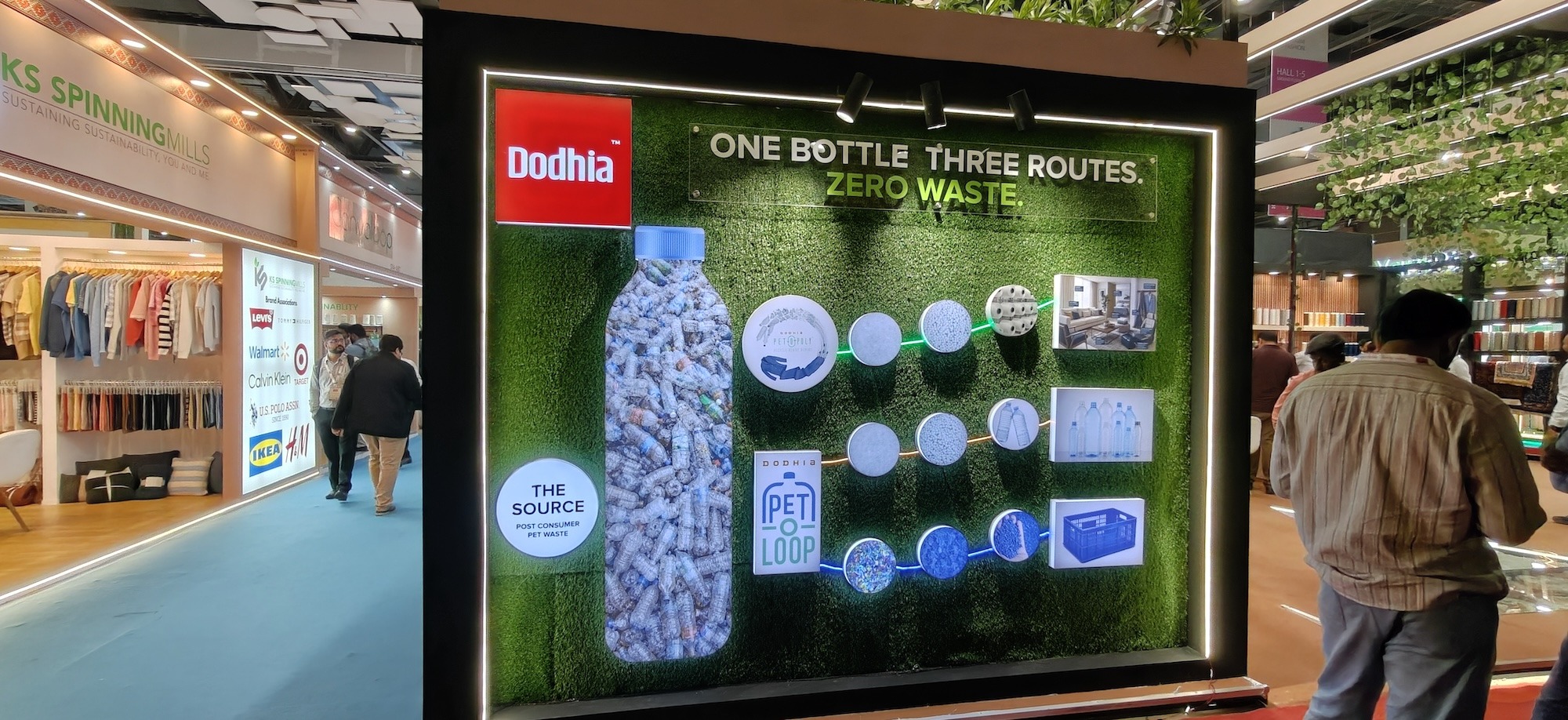
One of the more striking displays was from Dodhia, showing a “One Bottle, Three Routes” circular model: post-consumer PET bottles processed into recycled polyester for home furnishings, into new PET bottles, and into moulded plastic crates – a genuinely closed-loop system rather than a single-use recycling claim.

Dodhia’s closed-loop PET recycling system – one bottle, three finished-product routes.

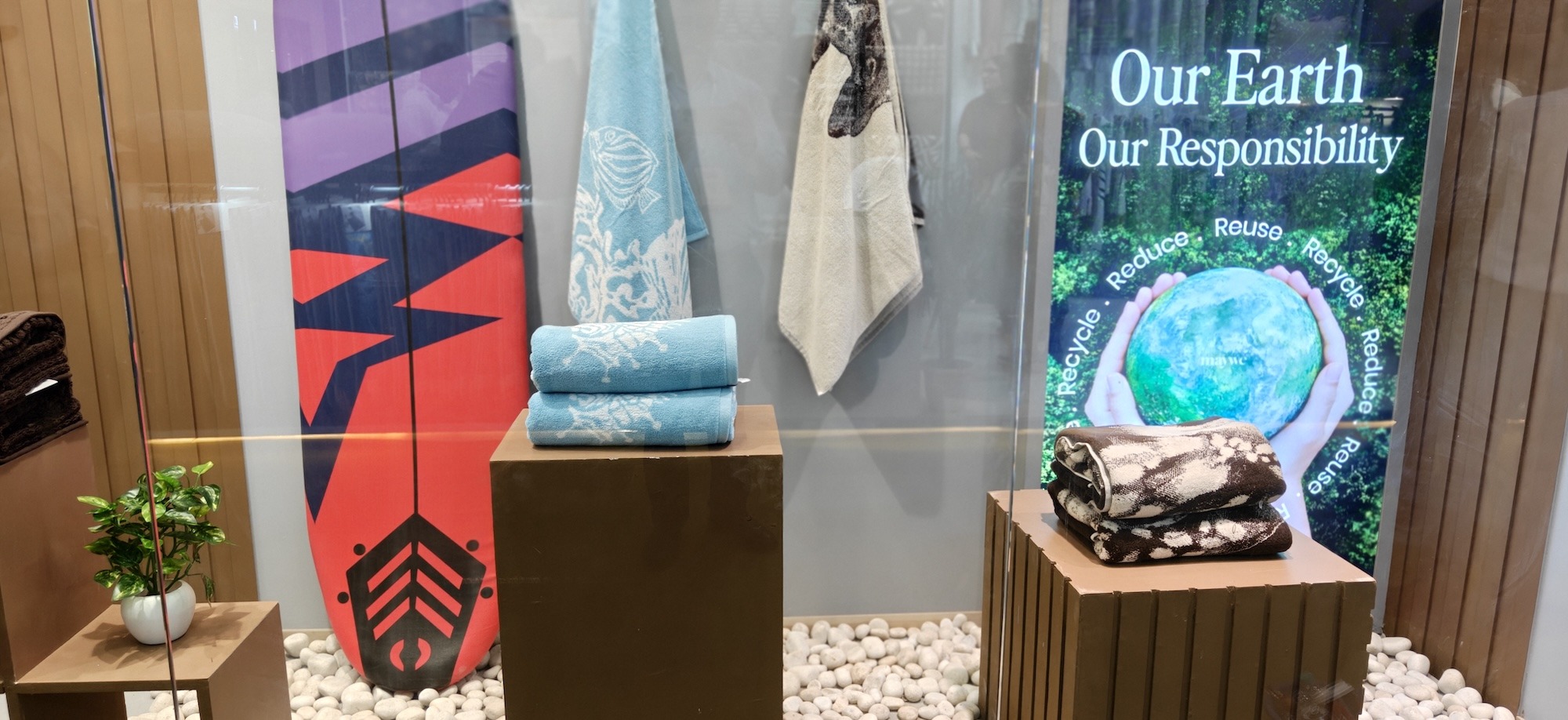
Recycled-fibre towels and outdoor textiles on display – sustainability built into the product, not bolted on.

For buyers, this matters because GRS, GOTS and OEKO-TEX documentation are no longer premium add-ons — it is becoming baseline expectations for retail and hospitality buyers in the US and EU. If your current supplier can’t produce these certificates on request, that’s worth flagging.

Newton Exports already works only with GOTS, GRS and OEKO-TEX-compliant manufacturers across our Home Decor, Lifestyle & Giftware and Fashion, Textiles & Leather Goods divisions.

2. Home Textiles: Deep Product Range, Strong Compliance Focus

The home textiles halls were dense with exhibitors – bed linen, cushions, towels, throws, curtains and table linen in particular. Suppliers showcased Egyptian, Supima and organic cotton towel ranges alongside recycled and bamboo fibre lines, with a clear emphasis on GSM variety and finish (zero-twist, quick-drying).

We also saw the increasing sophistication of private-label-ready presentation – factories now bring full room-set mockups (bedding, table settings, cushions) rather than just fabric swatches, making it easier for buyers to visualise a finished collection before committing to a sample order.

3. Technical Textiles: Films, Coatings and Certified Safety Wear

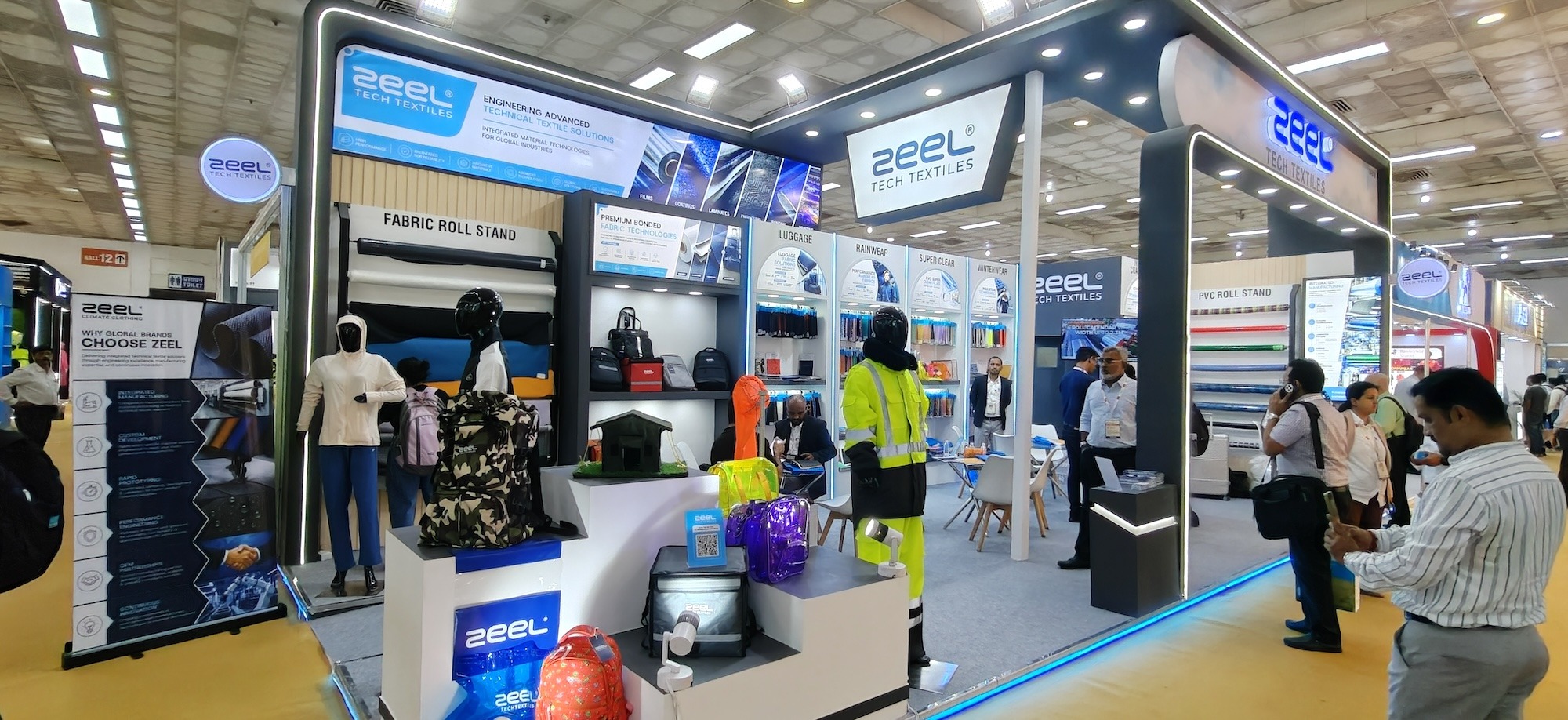
This is the hall where Newton Exports spends the most time. ZEEL Tech Textiles’ stall was a strong showcase of what “technical textiles” actually covers day to day – bonded fabric technologies, PVC and PU coatings, laminates and films feeding into luggage, rainwear, winterwear and industrial protective gear, all displayed with clear application-based signage (Luggage, Rainwear, Super Clear, Winterwear).

Alongside it, Rameswar Udyog’s stall displayed coveralls, safety gloves and industrial yarns (combed, carded, open-end, TFO doubled) backed by Sedex, SMETA and INDITEX compliance certifications.

This is squarely in our wheelhouse. Newton Exports’ Technical Textiles & Films division regularly sources and exports Cross Laminated Tarpaulins and Woven Coated Tarpaulins, and the compliance bar we saw exhibitors holding themselves to at Bharat Tex 2026 – third-party audited, internationally certified – is exactly what we vet for before onboarding a new mill.

4. Fashion, Fibre and the Story of Linen

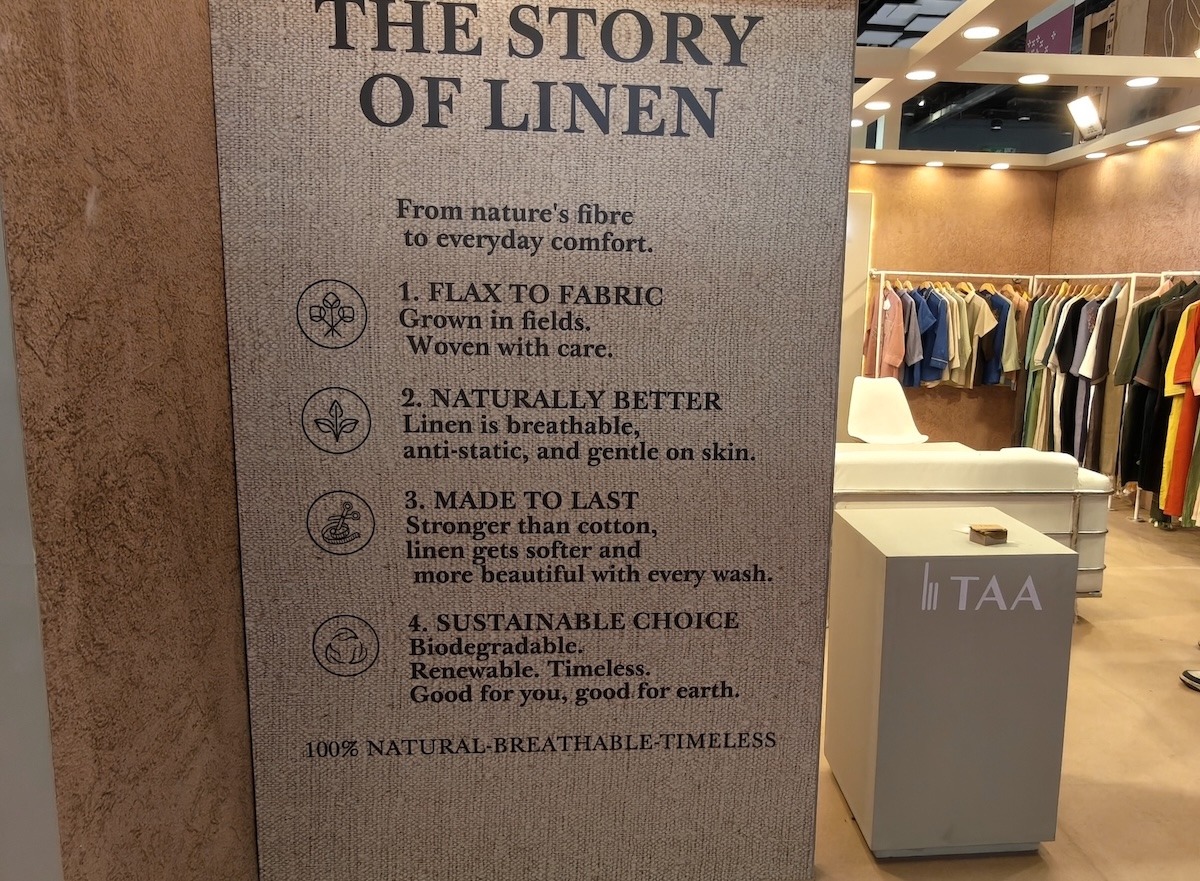
The fashion and apparel halls leaned heavily into natural fibres this year. One exhibit — “The Story of Linen” — walked buyers through the flax-to-fabric journey, positioning linen as stronger than cotton, biodegradable, and improving with every wash. Racks of finished linen apparel in earth tones and colour-blocked panels reflected a broader shift toward natural, low-impact fibres in ready-to-wear.

TAA’s “Story of Linen” – positioning linen as stronger, more breathable & more sustainable than cotton.

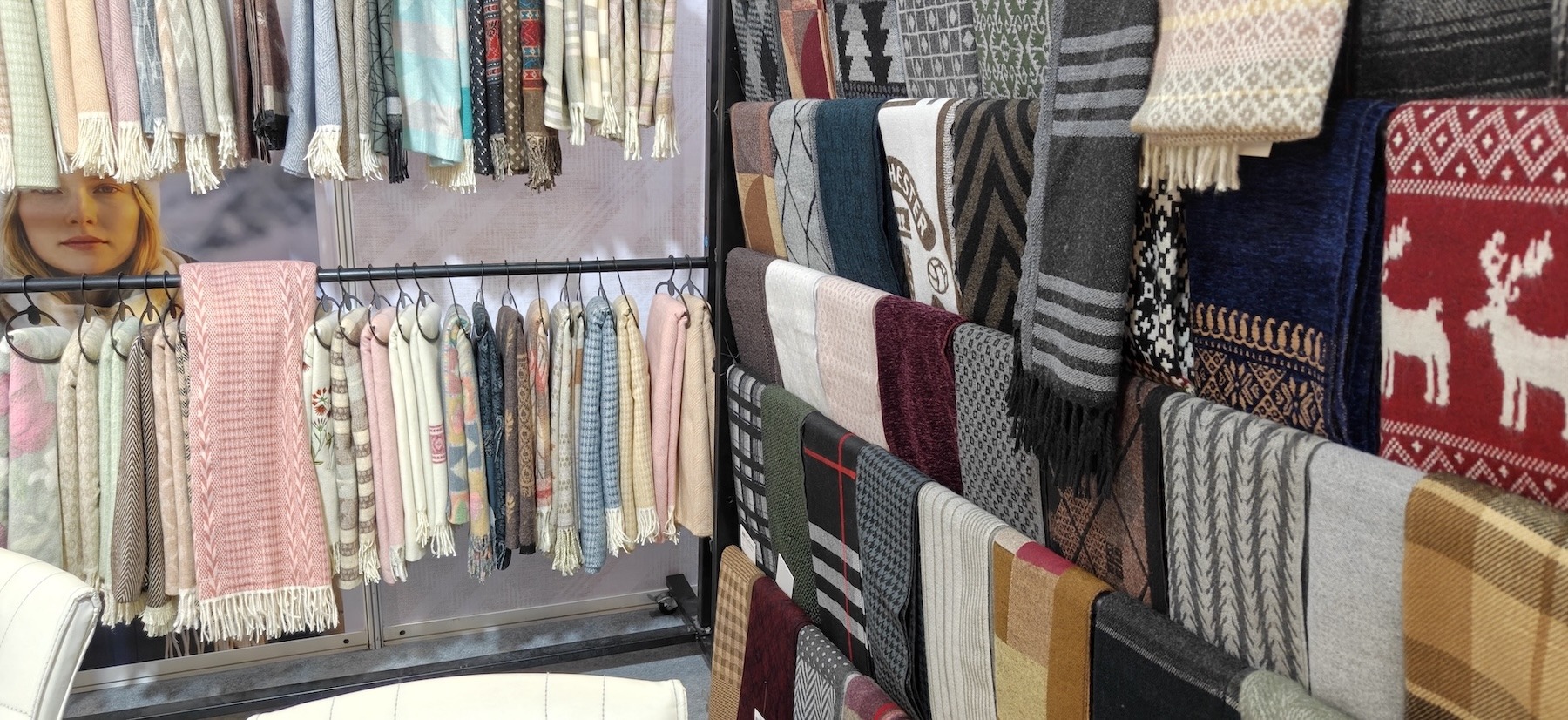
Winter accessories – scarves, throws & blankets – remain a strong seasonal export category.

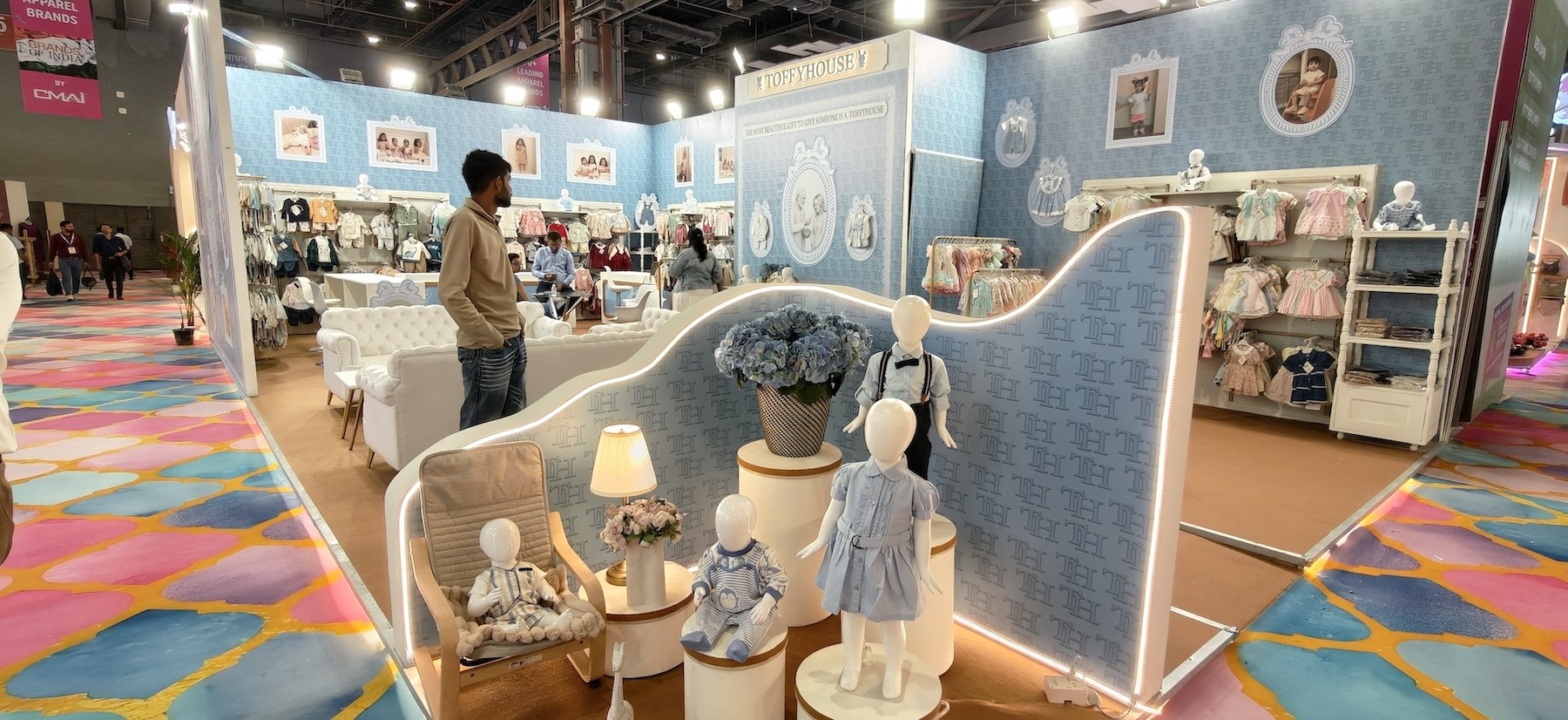
Large integrated players also had a major presence, showing the full pipeline from yarn to finished garment under one roof — a reminder of how vertically integrated Indian textile manufacturing has become. We also spent time in the kidswear halls — brands like Toffyhouse showed how far Indian apparel manufacturing has moved into premium, brand-ready children’s clothing, not just private-label basics.

Toffyhouse’s kidswear booth — premium presentation is now standard even in categories once seen as commodity.

5. Jute, Paper and the Case Against Plastic

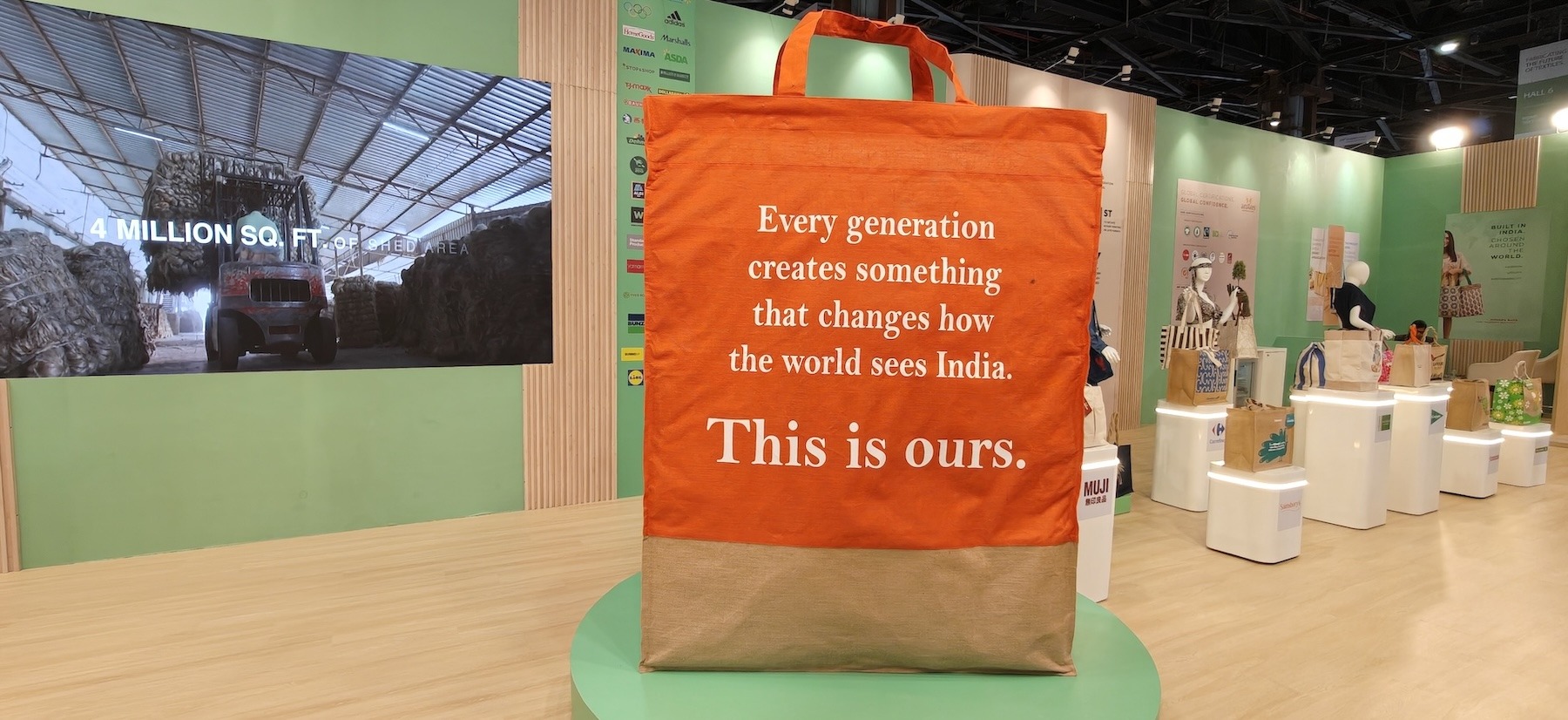
A jute shopping bag installation makes the case for India’s role in sustainable packaging – retailers already on board are named in the background.

Away from apparel, one of the more memorable displays was a giant jute shopping bag with the line “Every generation creates something that changes how the world sees India. This is ours” – backed by a wall of finished jute and paper bags already carrying the logos of major global retailers. It’s a strong, simple reminder that India’s fibre base extends well beyond cotton and synthetics – jute and juco remain a genuine sustainable-packaging alternative for buyers looking to move away from single-use plastic.

6. Design as a Differentiator, Not Just Decoration

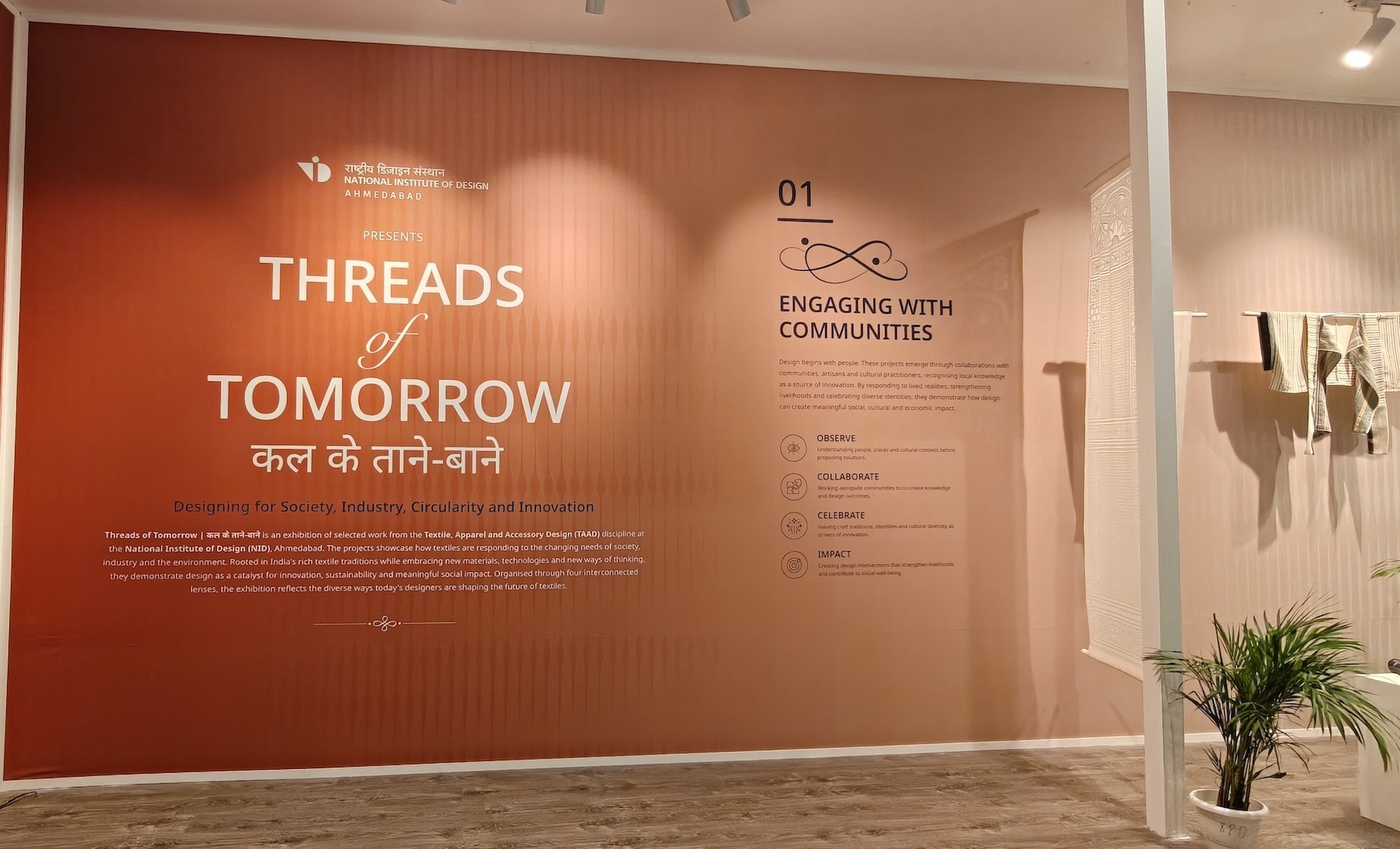
NID Ahmedabad’s “Threads of Tomorrow” — design and craft as a driver of textile innovation, not just aesthetics.

A standout non-commercial exhibit was “Threads of Tomorrow” by the National Institute of Design (NID), Ahmedabad — a showcase of student and faculty work exploring textiles through the lens of society, industry, circularity and innovation, built around community engagement with artisans and craft practitioners.

It’s a useful reminder for buyers: India’s textile advantage isn’t just cost and scale. It’s also design depth – centuries of craft tradition increasingly being merged with sustainable materials and modern production techniques, which is where a lot of the interesting private-label opportunity sits.

7. India's Trade Position, on Display

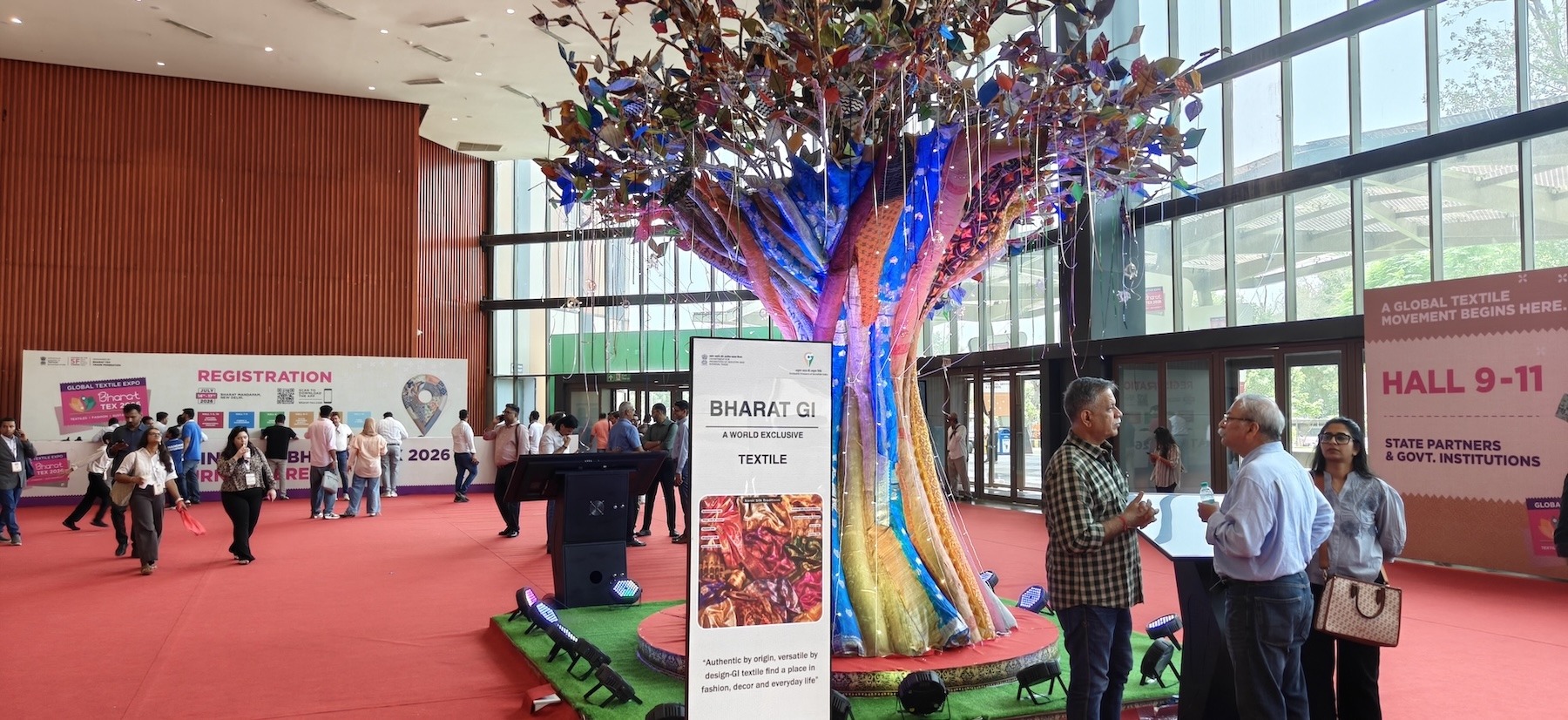
The “Bharat GI” installation at the entrance — a symbolic centrepiece for the expo’s trade narrative.

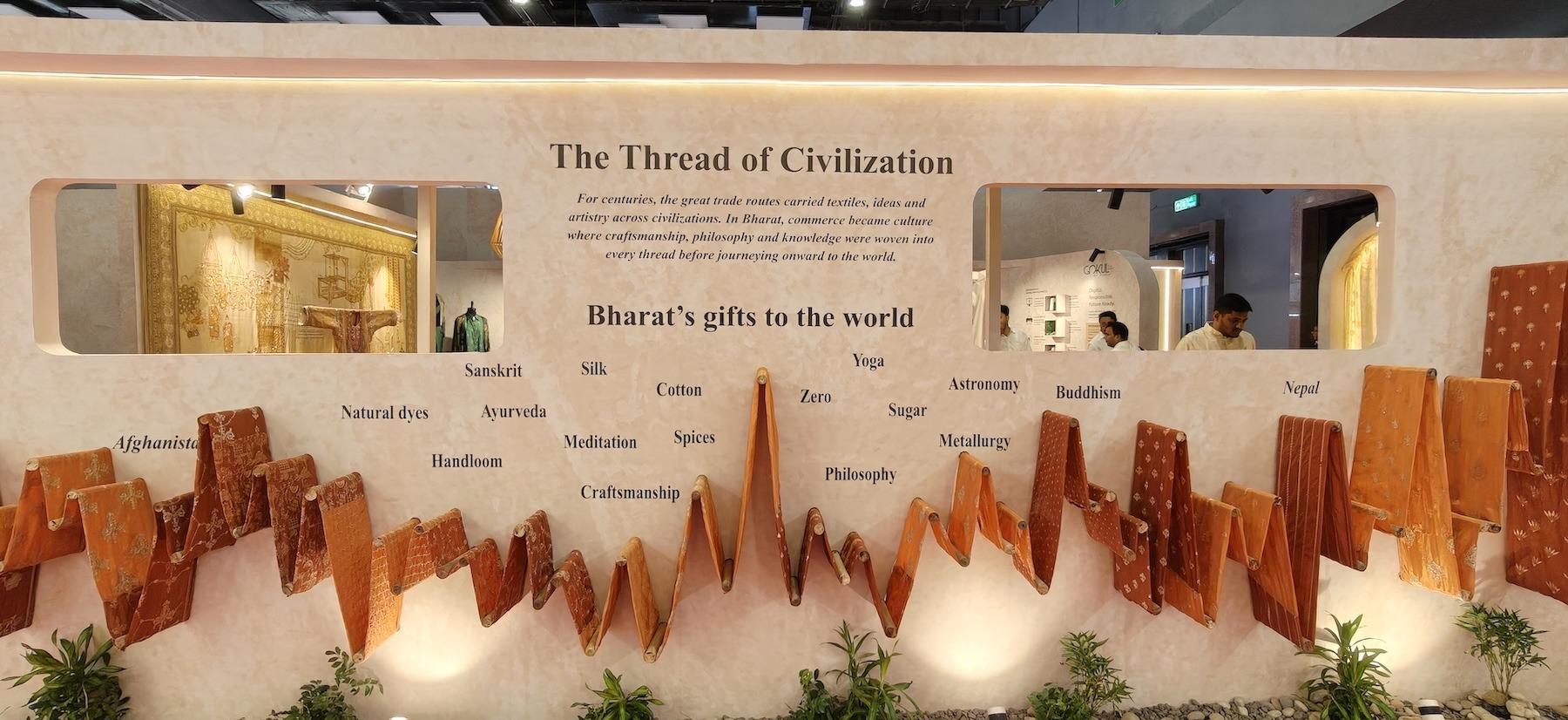
The entrance lobby to Hall 6 featured this large installation alongside a wall titled “The Thread of Civilization,” tracing how textiles, ideas and craftsmanship moved along historic trade routes into and out of India. It’s more than expo theatre: it’s a fair summary of why global buyers keep coming back to India as a sourcing base – a manufacturing ecosystem built on genuine depth, not just current cost advantage. For a data-driven look at how that stacks up against the alternative, see our note on India vs China sourcing.

What This Means for Your Sourcing Strategy

If you’re currently sourcing textiles, home décor, technical fabrics, or apparel from India – or considering it – a few takeaways from this year’s expo:

  • Ask for certifications up front. GRS, GOTS, OEKO-TEX and Sedex/SMETA are increasingly the norm among serious exporters, not a differentiator.
  • Private-label presentation has improved. Factories are investing in better sampling and room-set visualisation – use this to move faster from concept to first order.
  • Technical textiles compliance is rising. If you’re sourcing PPE, tarpaulins, coated/laminated fabrics, or industrial fabrics, expect (and verify) international standard compliance.
  • Natural fibres are back in focus – linen and organic cotton in particular – alongside continued strength in polyester and blended technical fabrics.
  • Jute and juco are a real alternative for buyers looking to move away from single-use plastic packaging.

Looking to Source from India?

Newton Exports has been an export management partner for global buyers since 2004, across six divisions — Technical Textiles & Films, Construction & Building Materials, Agri-Food Products, Engineering & Industrial Components, Fashion/Textiles/Leather, and Home Décor & Giftware. We attend expos like Bharat Tex specifically to keep expanding our vetted supplier network and stay ahead of what’s next in Indian manufacturing.

If you’re a buyer looking for a sourcing partner in India, or a manufacturer looking to expand into export markets, get in touch with us

More from Newton Global Connect, your go-to source for India Export Insights & Buyer Guides

Miniket-Rice
Premium Parboiled Miniket Rice Exporter
Trusted premium parboiled Miniket rice exporter. Bulk B2B supply, Sortex-cleaned, EU MRL compliant, private label packaging. Request a quote today!
UK India FTA
What the Landmark UK India FTA Means for Global Supply Chains
On July 15, 2026, the historic UK India Free Trade Agreement (FTA) officially entered into force changing the global trade landscape.
NID Threads of Tomorrow Newton Exports
Bharat Tex 2026: Key Sourcing Trends for Global Buyers
Newton Exports at Bharat Tex 2026 — sustainability, home textiles, technical fabrics and craft trends every global buyer sourcing from India should kn...
Woven Coated Tarpaulin UV Stabilized
Woven Coated Tarpaulin
Newton Exports supplies woven coated tarpaulin, UV stabilized , IS 7903 tested. 70–250 GSM (higher on order), 7 colours. Get samples.
Cross Laminated Tarpaulin
Newton Exports supplies UV stabilized cross laminated tarpaulin / multi-layer cross laminated film, 35–300 GSM, made in India on American technology, lab-tested....
Geomembrane Pond Liners
Geomembrane Liners for Ponds & Water Retention | India
HDPE geomembrane liners for ponds, canals and water retention — leak-proof, UV-stabilized, IS-certified. Bulk export from India.