US retailers are increasingly switching from China to India for their home decor and textile needs. As the global retail landscape continues to evolve, this significant trend is emerging. This shift is not just a minor blip on the radar; it’s a seismic change that’s poised to reshape the industry. But what’s driving this exodus from China, and what benefits can US retailers expect from making the switch to India for home decor and textiles? In this comprehensive guide, we’ll delve into the reasons behind this trend, the advantages of sourcing from India, and what this means for the future of home decor and textiles.

The Rise of India as a Sourcing Hub for Home Decor & Textiles

For decades, China has been the go-to destination for US retailers looking to source affordable, high-quality home decor and textiles. However, in recent years, India has emerged as a viable alternative, offering a unique combination of competitive pricing, skilled labor, and favorable government policies. India’s home decor and textile industries, in particular, has experienced rapid growth, with the country becoming the second-largest textile exporter in the world. This growth can be attributed to India’s large pool of skilled workers, modern manufacturing infrastructure, and favorable government initiatives, such as the Make in India program. As a result, US retailers are taking notice, and many are now exploring India as a prime sourcing destination for their home decor and textile needs.

Benefits of Sourcing from India

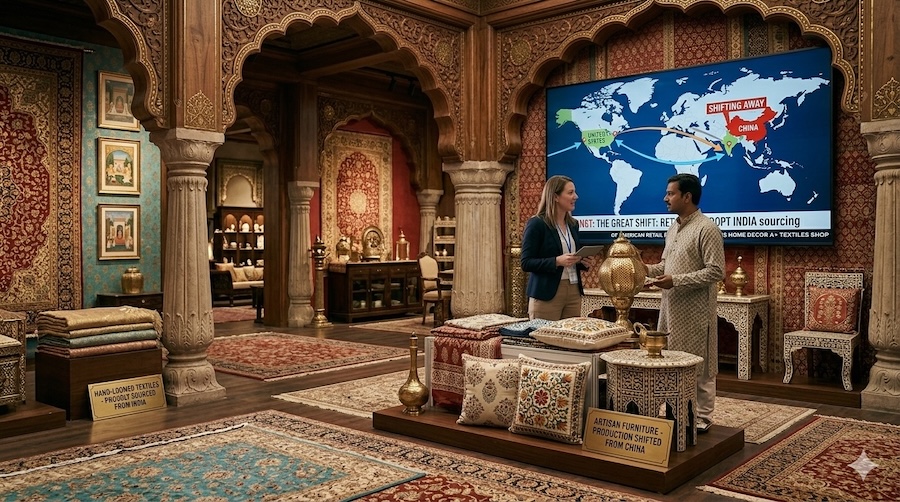
the great china india us shift

So, what are the benefits of sourcing home decor and textiles from India? For starters, India offers a significant cost advantage compared to China. Labor costs, in particular, are lower in India, which can result in substantial savings for US retailers. Additionally, India’s textile industry is known for its high-quality products, with many Indian manufacturers adhering to international standards and certifications, such as ISO 9001 and OEKO-TEX. Another advantage of sourcing from India is the country’s strategic location, which allows for faster shipping times and lower logistics costs compared to China. Furthermore, the Indian government has implemented various initiatives to support the textile industry, including tax incentives, subsidies, and investment in infrastructure development. These benefits are making India an attractive option for US retailers looking to diversify their supply chain and reduce their reliance on China.

Overcoming Challenges and Mitigating Risks

While India offers many advantages as a sourcing destination, there are also challenges and risks that US retailers need to be aware of. One of the primary concerns is the complexity of India’s regulatory environment, which can be daunting for foreign companies. Additionally, Indian manufacturers may not always have the same level of technology and automation as their Chinese counterparts, which can impact product quality and lead times. To overcome these challenges, US retailers should work closely with their Indian suppliers to ensure that they meet the required standards and certifications. It’s also essential to conduct thorough research and due diligence when selecting an Indian supplier, including auditing their facilities, reviewing their quality control processes, and assessing their compliance with international regulations. By taking a proactive and informed approach, US retailers can mitigate risks and ensure a successful sourcing experience in India.

Opportunities for US Retailers

The shift from China to India presents a range of opportunities for US retailers, from improving profitability to enhancing their brand reputation. By sourcing high-quality, affordable home decor and textiles from India, US retailers can increase their margins and stay competitive in a crowded market. Additionally, Indian suppliers often offer more flexible production runs and faster turnaround times, which can enable US retailers to respond quickly to changing consumer trends and demand. Furthermore, India’s rich cultural heritage and traditional craftsmanship offer a unique opportunity for US retailers to create distinctive and authentic products that resonate with consumers. By leveraging these strengths, US retailers can differentiate themselves from their competitors and establish a strong brand identity.

Conclusion and Key Takeaways

In conclusion, the shift from China to India for home decor and textiles is a significant trend that’s poised to reshape the US retail landscape. By understanding the benefits of sourcing from India, including cost savings, high-quality products, and strategic location, US retailers can make informed decisions about their supply chain and improve their competitiveness. While there are challenges and risks associated with sourcing from India, these can be overcome by working closely with suppliers, conducting thorough research, and taking a proactive approach to risk management. As the US retail industry continues to evolve, one thing is clear: India is emerging as a major player in the global home decor and textile market, and US retailers who adapt to this shift will be well-positioned for success. Key takeaways from this guide include:

  • India offers a cost advantage and high-quality products, making it an attractive alternative to China for US retailers.
  • The Indian government’s initiatives and investments in the textile industry are creating a favorable business environment for foreign companies.
  • US retailers should conduct thorough research and due diligence when selecting an Indian supplier to mitigate risks and ensure a successful sourcing experience.
  • The shift from China to India presents opportunities for US retailers to improve profitability, enhance their brand reputation, and create distinctive and authentic products.

As the great shift from China to India continues to gain momentum, US retailers who are proactive, informed, and adaptable will be best positioned to capitalize on the benefits of sourcing from India and thrive in the ever-changing world of home decor and textiles.

Newton Exports is a execution and coordination entity we work with US buyers to fulfil all their home decor and textile needs from India. We provide sourcing services, documentation, logistics and shipping services as required.

Tarpaulin from India

Tarpaulins from India: Cross-Laminated vs Woven Coated — What Buyers Need to Know

Tarpaulins from India represent exceptional value when sourced correctly.
Newton Polypropylene Spunbond Non-Woven Fabric

Polypropylene Spunbond Non-Woven Fabric: The Global Buyer’s Guide to Sourcing from India

Discover everything buyers need to know about sourcing polypropylene spunbond non-woven fabric from India — specs, GSM ranges, certifications, applications and top importing countries.
Indian Forging Industry

Forging the Future: Why the World is Turning to Indian Forging Industry

Indian forging industry is booming. Explore top export countries, essential HS codes for forged components, and how Newton Exports acts as your strategic partner,
New Zealand India FTA

New Zealand India Free Trade Agreement: What It Means for Importers

New Zealand India FTA - the most significant takeaway for Kiwi businesses is the shift to Zero-Tariff trade.
India vs China Sourcing

India vs China Sourcing

Compare India vs China sourcing for 2026, including costs, lead times, compliance, and risk. Discover why India is emerging as a preferred China+1 partner
india manufacturing export

How to Find a Reliable Supplier in India

Learn how procurement managers can identify a reliable supplier in India, from verifying credentials to vetting quality and logistics partners, with data‑backed sourcing tips for