Blog
How to Source Reliable OEM Manufacturers in India: A 2026 Guide for Global Buyers

The global supply chain map is being redrawn. By 2026, the “China Plus One” strategy has moved from a boardroom buzzword to an operational necessity for Western brands. As companies seek to de-risk their supply chains and diversify production base, one nation has emerged as the undisputed nexus of opportunity: India.
However, for procurement managers sitting in New York, London, or Berlin, the vast Indian landscape can seem daunting. The challenge is no longer just sourcing from India; the challenge is separating the noise from the substance. How do you distinguish a sophisticated, export-ready factory from a domestic trader posing as a manufacturer?
Finding India OEM manufacturers capable of meeting stringent global quality standards requires a strategic approach. This 2026 guide breaks down the process of finding reliable suppliers in India’s booming manufacturing sector.
The Indian Advantage in 2026: By The Numbers
India’s manufacturing maturity has accelerated rapidly in the last five years, driven by aggressive government infrastructure spending and Production Linked Incentive (PLI) schemes.
Today, India is not just exporting raw commodities; it is moving up the value chain into precision engineering, complex textiles, electronics, and value-added consumer goods.
The Data Point: As of early 2026, estimates suggest India is home to over 63 million Micro, Small, and Medium Enterprises (MSMEs). Crucially, the number of these enterprises actively registered for export with an Import Export Code (IEC) has seen double-digit year-on-year growth since 2022.
What this means for you: The depth of the supplier pool is immense. There are thousands of highly capable OEM manufacturers hungry for global business—but they are often hidden amidst millions of smaller, domestically focused players.
Step 1: The Blueprint – Define Before You Search

Reliability starts with clarity. Many sourcing disasters happen because the buyer provided vague requirements. Before you send a single email to potential India OEM manufacturers, your internal homework must be flawless.
You must have a complete Technical Package (Techpack). This should include detailed 2D/3D drawings, Bill of Materials (BOM), acceptable tolerance levels, testing protocols, and packaging standards. A serious OEM manufacturer will respect detailed specs; a dubious one will promise they can “make anything” without looking at the details.
Step 2: The Discovery Phase – Casting the Net
Where do you begin sourcing from India?
B2B Platforms (Use with Caution): Sites like Indiamart, Tradeindia, and Global Sources are massive directories. They are useful for building an initial long-list, but treat them as the “Yellow Pages.” They contain a mix of genuine factories, traders, and agents.
Trade Shows (The Gold Standard): Nothing beats face-to-face interaction. Major 2026 events like the IHGF Delhi Fair (for handicrafts/textiles) or municipal engineering expos are where serious exporters showcase their capabilities.
Newton Pro Tip: The Trader vs. Manufacturer Trap
Many “manufacturers” on B2B portals are actually traders. They take your order and outsource it to a smaller, unvetted workshop. Always ask: “Can I see your machinery running my product?”
A trader will make excuses; a real manufacturer will welcome the visit.
5 Red Flags When Vetting Indian Suppliers:
- They offer prices that seem too good to be true (quality will suffer).
- They avoid video calls or refuse a factory visit.
- They demand payment upfront via untraceable methods.
- They have no export license (IEC code) of their own.
- They claim to manufacture vastly different product categories (e.g., "We make electronics and leather shoes").
Step 3: Vetting for Reliability – The Digital Audit
This is the phase where you filter out 80% of the candidates to focus on finding reliable suppliers. Do not rely solely on a glossy website.
Verify Registrations: Ask for their IEC (Import Export Code), GST registration and incorporation certificate. A legitimate manufacturer will provide these immediately.
Check Certifications: Do they hold ISO 9001 for quality management? Are they SA8000 certified for social accountability? In sectors like food or cosmetics, are they FDA registered? Verify these certificates with the issuing body-forgeries exist.
The Client Reference Test: Ask for references from current US or European clients. If they claim confidentiality, ask for redacted Bill of Lading (BOL) copies proving they have shipped to your region recently.
Step 4: The Physical Reality Check – Boots on the Ground

A digital handshake is never enough for a long-term OEM partnership. You-or your trusted representative-must visit the factory.
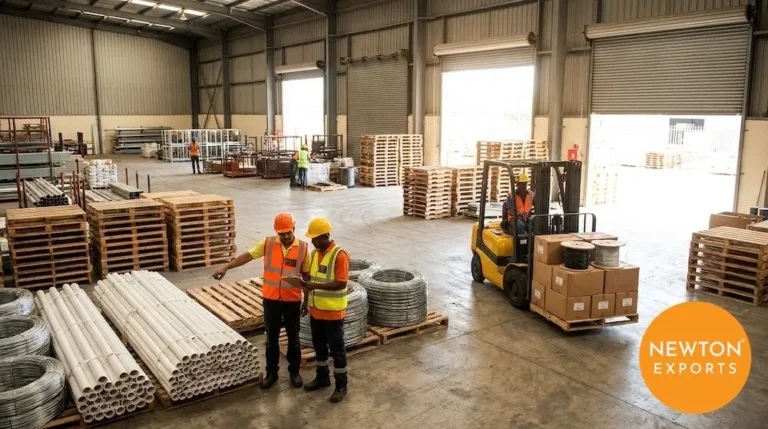
During a site audit, you aren’t just looking at machinery. You are looking at culture. Is the floor clean? Is there a dedicated Quality Control (QC) area? Do they have an in-house testing lab, or do they outsource it? Are workers wearing safety gear? A factory that cuts corners on safety will cut corners on your product quality.
The "Boots on the Ground" Shortcut
For many small to mid-sized global businesses, executing Step 4 is logistically difficult and expensive. This is the gap that Newton Exports fills.
We don’t just act as a directory; we act as your localized procurement arm. We conduct the pre-vetting, perform the factory audits and manage in-process quality inspections so that you don’t have to fly halfway across the world to ensure reliability.
Conclusion
Sourcing from India in 2026 offers an unparalleled opportunity to build a resilient, cost-effective and high-quality supply chain. The manufacturers are there, and they are ready for global business. By following a rigorous vetting process and refusing to cut corners on due diligence, you can unlock the potential of Indian manufacturing with confidence.