Concrete Batching Plant Manufacturers in India: Choosing the Right Capacity
From 20 m³/h mobile plants to 240 m³/h stationary giants: how to size a batching plant to your pour schedule, pick the right mixer and configuration, and get it running on site.
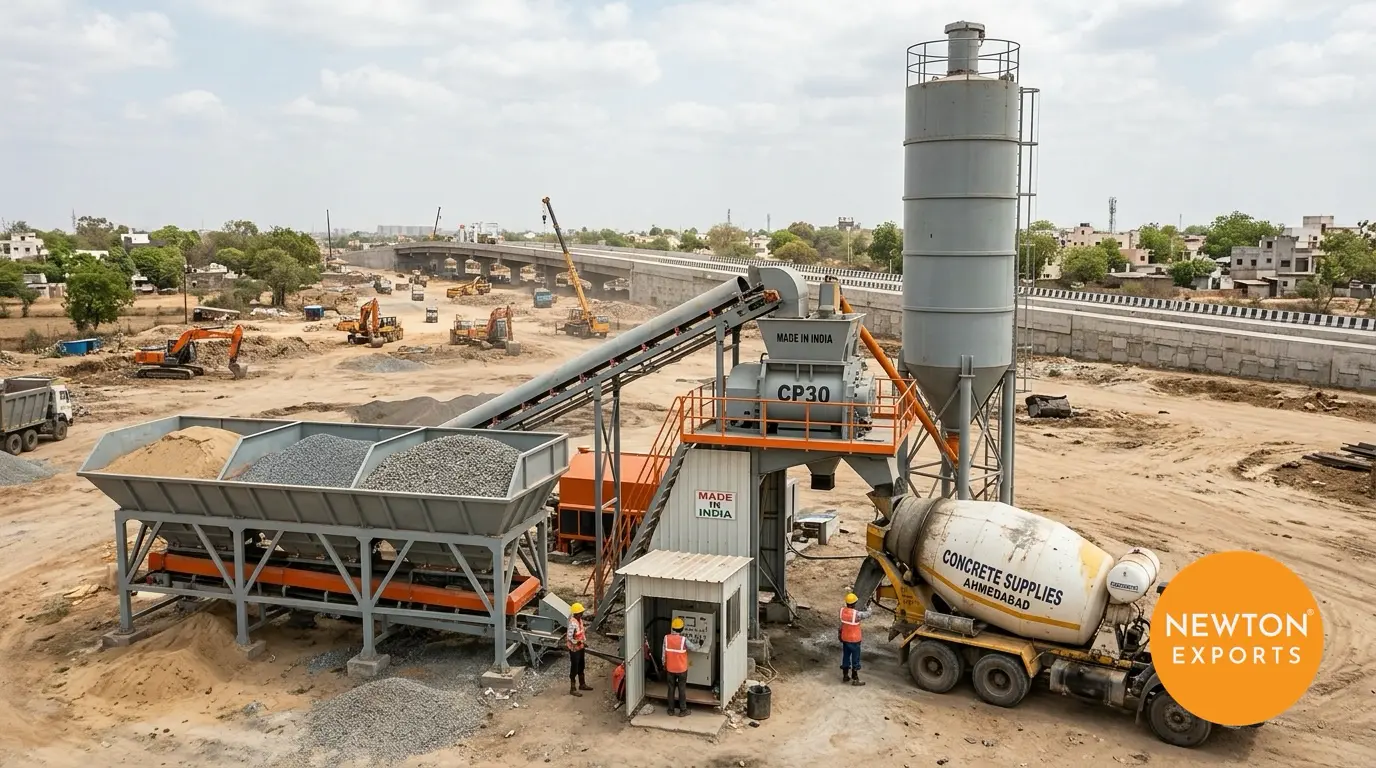
Concrete batching plant manufacturers in India now cover the full range most export buyers need, from 20 m³/h mobile plants that tow to a remote site to 240 m³/h stationary plants for airports and dams. A batching plant weighs and mixes cement, aggregate, sand, water and admixtures in precise, repeatable proportions, either for continuous use on one large site or as the heart of a ready-mix business.
The single decision that shapes everything else is capacity. Get it right and the plant keeps your trucks and pumps busy. Get it wrong and you either wait for concrete on every large pour or pay for a plant that sits idle. This guide walks through how to size it properly, then covers mixer type, configuration, site preparation and shipping.
20–240
m³/h capacity range we supply
11
Plant models across 4 brands
60–70%
Typical real output vs rated capacity
3
Configurations: mobile, compact, stationary
What a Concrete Batching Plant Does
A batching plant replaces manual or small-mixer batching wherever consistent concrete quality and volume matter. Aggregates are weighed from bins, cement comes from a silo by screw conveyor, water and admixtures are dosed by meter or weigher, and everything is discharged into a mixer that produces a uniform batch every cycle. Building foundations, road pavement, bridge decks and precast production all depend on that consistency.
There are two ways buyers use a plant: as a site plant that serves one project and moves on, or as a ready-mix plant that supplies many customers from a fixed yard. The first favours mobility and quick setup. The second favours capacity, storage and long-term reliability.
02Batching Plant Capacity: Match Output to Your Project
Capacity is measured in cubic metres of concrete per hour. These are the bands we see export buyers choose, and the plants we supply in each:
Capacity
Typical projects
Plants from India
20–35 m³/h
Building sites, small roads, irrigation works, precast yards, remote projects
Conmat CBP-200M and CBP-360M, Ajax CRB 20, Schwing Stetter CP30 and M30Z
60 m³/h
Road and bridge projects, mid-size ready-mix plants
Ajax CRB 60, SANY HZS60X10
90–120 m³/h
Highways, large ready-mix operations, dams and industrial plants
Schwing Stetter M2 (94 m³/h), Ajax CRB 120, SANY HZS120X8Pro
240 m³/h
Mega projects: airports, ports, dams, metro systems
SANY HZS240C10H
Size the plant against your largest continuous pour, such as a raft foundation, bridge deck or pavement section that must be placed without a cold joint. An undersized plant becomes the bottleneck on exactly those days, while a plant that is far too large ties up capital and site space for capacity you rarely use.
Buyer tip
If your business is likely to grow, discuss future volume now. Moving from a 20 m³/h to a 35 m³/h plant later usually costs more in total than specifying the larger plant from the start, once you count decommissioning and replacing the smaller one.
Rated vs Real Output, and How Many Transit Mixers You Need
The rated capacity on a brochure is the theoretical maximum with trucks waiting under the plant. In practice, truck changeovers, aggregate loading and quality checks bring sustained output down to roughly 60 to 70% of rated. Then the transit mixer fleet sets the real ceiling. Here is a worked example:
Item
Example
Plant rated capacity
60 m³/h
Realistic sustained output (about 65%)
about 39 m³/h
Transit mixer drum size
6 m³
Round trip: load, drive, pour, wash, return
60 minutes
Transit mixers needed (39 ÷ 6 × 1 h)
about 7 trucks
If you only have four trucks, that 60 m³/h plant will effectively run at about 24 m³/h. Either add trucks or choose a smaller plant and spend the difference on mixers and pumps. Longer haul distances push the truck count up quickly, which is why ready-mix businesses usually locate plants within 30 to 45 minutes of their main customers.
"A batching plant can only run as fast as your trucks come back."
04Twin-Shaft, Pan or Drum: Choosing the Mixer
The mixer decides how consistent your concrete is and which mixes the plant handles well. Always ask a supplier which mixer type a quoted plant uses.
Twin-shaft
Two counter-rotating shafts with paddles give fast, intensive mixing and very consistent batches. The standard for ready-mix and infrastructure work, and the choice for most plants of 30 m³/h and above.
Pan (planetary)
A rotating pan with mixing tools handles stiff, low-slump and coloured mixes well. Preferred by precast yards and block or paver producers, as on the Schwing Stetter M30Z.
Drum
The simplest and cheapest design, common on small self-loading mixers. Fine for low volumes, but less consistent than twin-shaft for structural concrete at scale.
Mobile, Compact or Stationary?
Decide how often the plant will move before you order. It changes foundation work, setup time and shipping method.
Configuration
Best for
Setup
Examples
Mobile
Road projects and sites that change every few months
Factory-assembled on a chassis; tows to site with minimal foundations
Conmat CBP-200M, CBP-360M; Schwing Stetter M2
Compact / modular
Precast yards, mid-term projects, tight sites
Pre-assembled modules bolted together on simple footings
Schwing Stetter CP30, M30Z; Ajax CRB 20
Stationary
Permanent ready-mix plants and multi-year mega projects
Full foundations, larger aggregate storage and multiple silos
Ajax CRB 60, CRB 120; SANY HZS series
Concrete Batching Plants We Supply from India
Eleven plants from Conmat, Ajax, Schwing Stetter and SANY, all built in India. Each card opens the product page with full specifications.
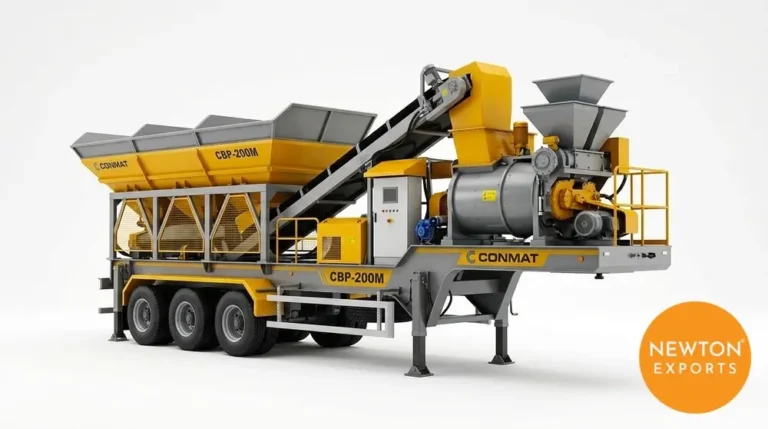 Conmat CBP-200M 20 m³/h · mobile
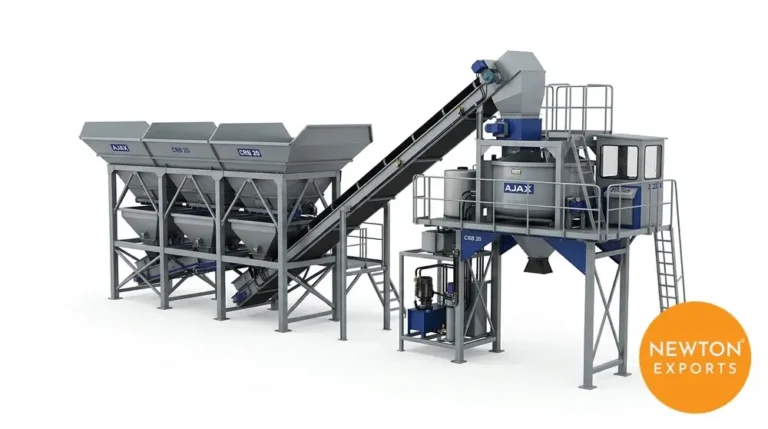 Ajax CRB 20 20 m³/h · cross-bin
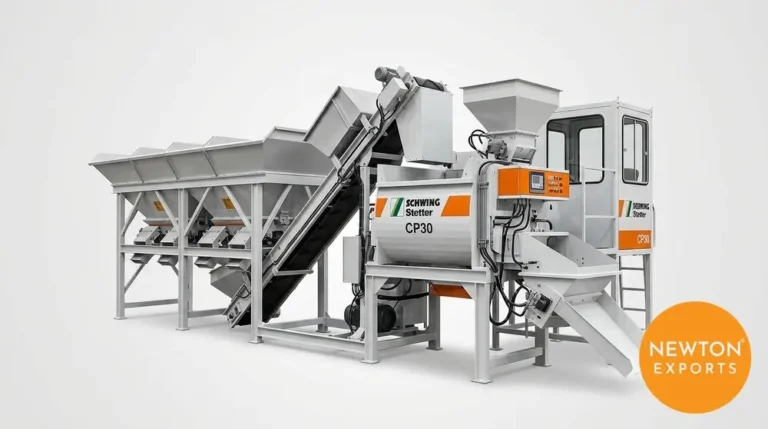 Schwing Stetter CP30 30 m³/h · compact
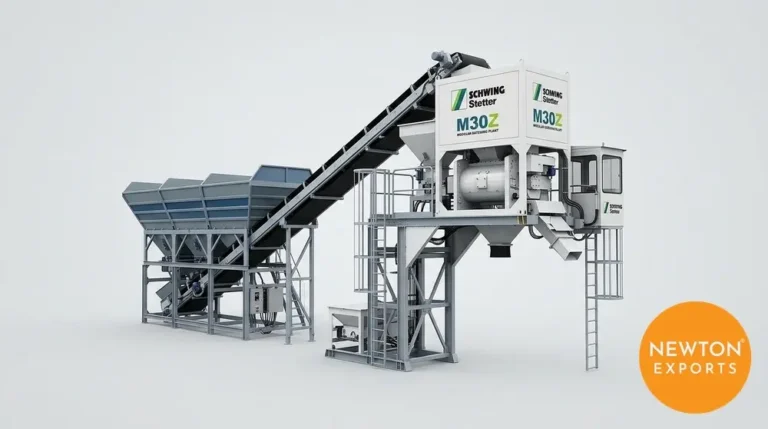 Schwing Stetter M30Z 30 m³/h · modular, pan mixer
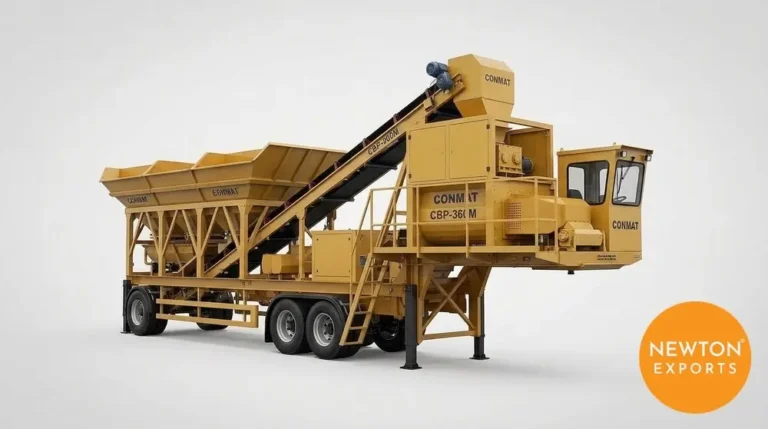 Conmat CBP-360M 35 m³/h · mobile, twin-shaft
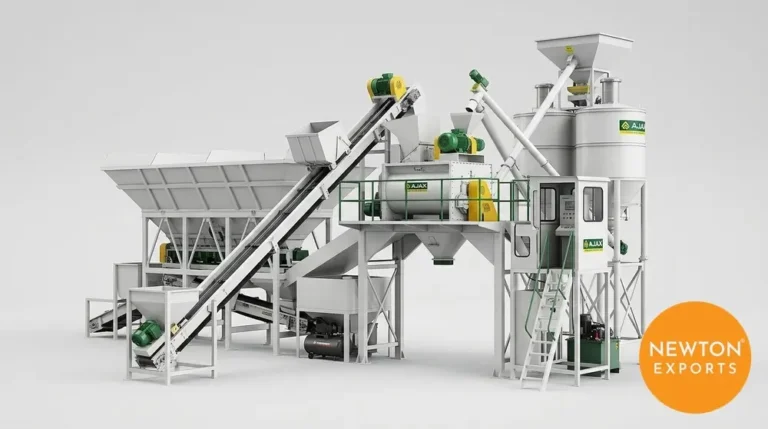 Ajax CRB 60 60 m³/h · stationary
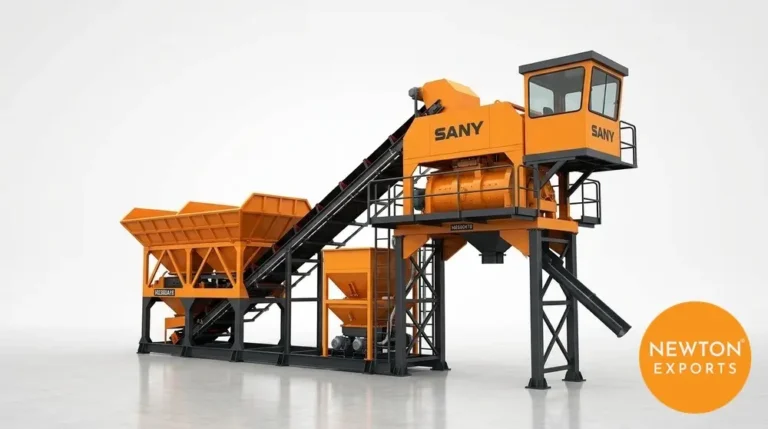 SANY HZS60X10 60 m³/h · 1,000 L mixer
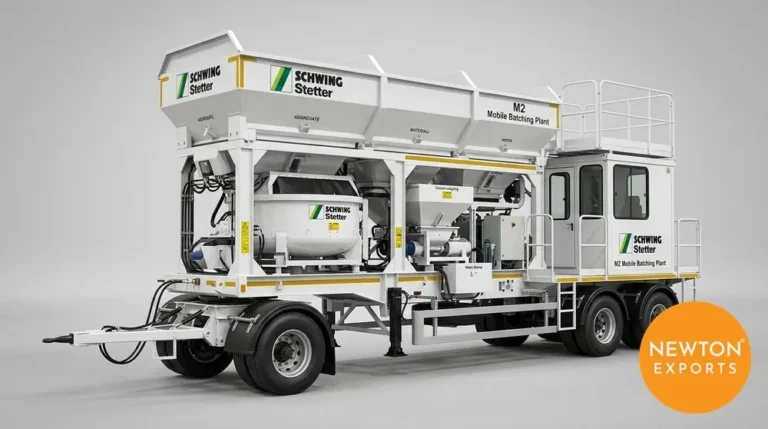 Schwing Stetter M2 94 m³/h · mobile
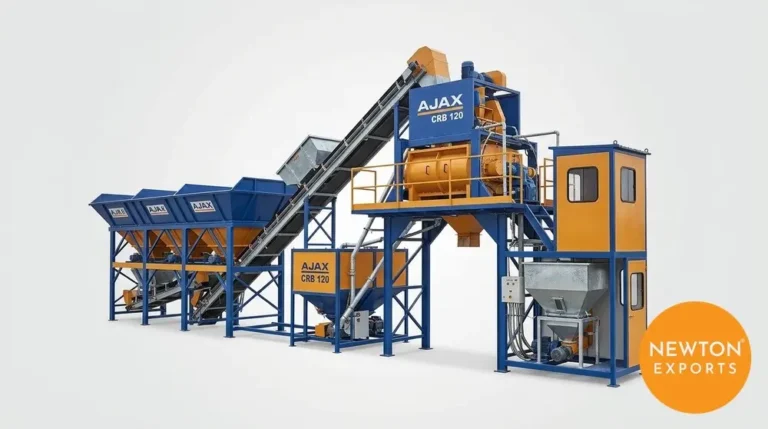 Ajax CRB 120 120 m³/h · twin-shaft
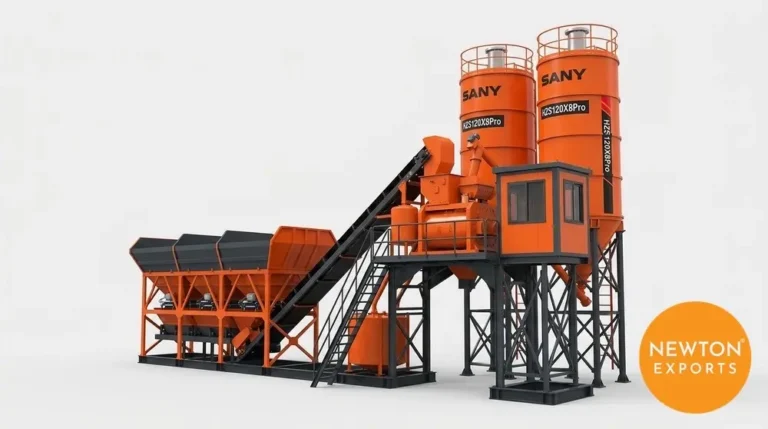 SANY HZS120X8Pro 120 m³/h · 2,000 L mixer
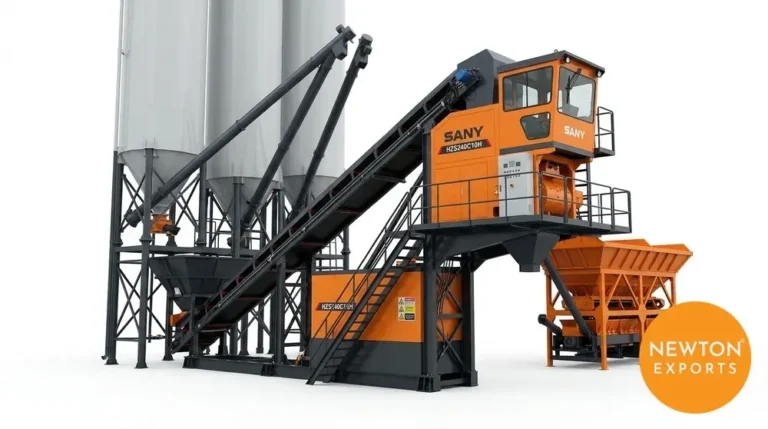 SANY HZS240C10H 240 m³/h · 4,000 L mixer View all batching plants → Compare capacities, mixers and configurations side by side
Not sure which capacity fits? Send us your pour schedule and haul distance.
Get Sizing AdviceSite Readiness Checklist
Site readiness decides your commissioning date more often than the plant itself. Confirm these before the plant ships:
Aggregate storage: enough stockpile or bin capacity for at least a full day of peak production.
Cement silos: number and size matched to daily cement use and your supplier's delivery frequency.
Water supply: concrete typically needs 150 to 200 litres per m³, plus water for washing trucks and the mixer.
Power: grid supply or a generator that matches the plant's electrical load, voltage and frequency.
Foundations and access: level ground or civil foundations, plus a clear loop for trucks and loaders.
People: a trained operator, a loader driver and a quality technician for slump and cube testing.
Watch out
Confirm early which components ship assembled and which need on-site assembly or welding. It affects your crane hire, civil work and commissioning timeline.
Commissioning and Support
Indian manufacturers provide installation guidance and commissioning support for their batching plants, either with technicians on site or remotely, depending on the model and destination. Newton Exports coordinates this alongside the shipment so your technical team knows what to expect on arrival.
Ask for a recommended spare parts list with the quotation: mixer liners and arms, belts, load cells and wear parts. Shipping a first set of consumables with the plant avoids weeks of downtime waiting for a small part in the first year.
09Shipping and Importing a Batching Plant from India
Shipping method. Mobile plants on their own chassis usually travel Ro-Ro or on flat racks. Compact and stationary plants are broken down into modules that ship in 40 ft containers, with oversized parts such as silos and the mixer frame on flat racks or open tops. Before booking, we share a packing list that gives the weight (MT) and volume (CBM) of every package, so you can plan port handling and inland transport.
HS code and documents. Concrete batching plants are generally classified under HS 8474.31 (concrete or mortar mixers); confirm the exact code with your customs broker. Every shipment comes with a commercial invoice, packing list, certificate of origin and the manufacturer's technical documentation. Pre-shipment inspection can be arranged on request.
Cost. Plants built in India typically cost considerably less than European imports of comparable capacity and mixer technology. For contractors and ready-mix businesses in Africa, the Middle East and South Asia, that difference often pays for the silos, loaders and transit mixers needed to run the plant at full output.
Get a CIF or CFR quote for a batching plant delivered to your port.
Request a QuoteComplete Your Concrete Operation
A batching plant works best alongside the right transport and placement equipment. See our other construction equipment range for Schwing Stetter transit mixers and concrete pumps, and Ajax self-loading mixers for smaller or remote pours. We can quote the full package, plant, mixers, pumps and loaders, in one consolidated shipment from India.
11Concrete Batching Plant FAQs
How do I choose the right batching plant capacity?
Size the plant to your largest continuous pour, not your average daily volume, and assume real output of about 60 to 70% of the rated capacity. Then check that your transit mixer fleet can keep up with that output.
What is the difference between rated and actual output?
Rated output is the theoretical maximum with trucks always waiting. Truck changeovers, aggregate loading and quality checks usually bring sustained output to around 60 to 70% of rated.
How many transit mixers does a batching plant need?
Divide realistic hourly output by drum size, then multiply by the round-trip time in hours. A plant producing 39 m³/h with 6 m³ drums and a 60-minute round trip needs about 7 trucks.
Should I buy a mobile or a stationary batching plant?
Choose mobile if the plant will move between projects every few months. Choose stationary for a permanent ready-mix yard or a multi-year project where capacity and storage matter more than mobility.
Is a twin-shaft mixer better than a pan mixer?
Twin-shaft mixers are best for ready-mix and structural concrete at volume. Pan (planetary) mixers are better for stiff, low-slump and coloured mixes used in precast, blocks and pavers.
Which batching plant brands are made in India?
We supply plants built in India by Conmat, Ajax, Schwing Stetter and SANY, covering 20 to 240 m³/h across mobile, compact, modular and stationary designs.
How is a batching plant shipped from India?
Mobile plants usually travel Ro-Ro or on flat racks. Compact and stationary plants ship as modules in 40 ft containers, with oversized parts on flat racks or open tops. We share a packing list with the weight (MT) and volume (CBM) of every package before booking.
What is the HS code for a concrete batching plant?
Concrete batching plants are generally classified under HS 8474.31, concrete or mortar mixers. Confirm the exact national code with your customs broker.
Capacities are manufacturer-rated figures. Output, truck counts and site requirements are typical planning values; we confirm them for your project, mix design and site conditions before you order.